A question worth sitting with: More productive days — or more time lost to sick leave? What’s 2026 bringing for you?
In 2026, employers are expected to focus more on preventive care, employee wellness, digital health access, healthcare cost management, and personalized benefits. These trends are shaping how companies improve retention, productivity, and workforce health.
Employees do not only evaluate salary. They also evaluate the quality, accessibility, and usefulness of healthcare benefits.
The U.S. healthcare system continues to face significant cost pressure. U.S. health spending grew 7.2% in 2024, reaching $5.3 trillion, while employers continue to manage rising medical costs, pharmacy spend, and changing employee benefit expectations. According to Aon, global medical trend rates are projected to reach 9.8% in 2026, making healthcare strategy a growing priority for employers.
Sounds overwhelming?
Do we have to worry?
According to Aon’s Global Medical Trends Rates Report, medical costs globally are expected to reach 9.8% in 2026.
Healthcare trends in 2026 will affect both employers and employees, and the impact goes far beyond benefits alone. It is also about attracting the best resource pool.
For employers, healthcare in 2026 is no longer just a benefits decision. It is a retention, productivity, and workforce planning strategy.
U.S. companies that invest in preventive care and employee health strategies can attract top talent and build a more resilient workforce.
1. Preventive Care Is Becoming a Core Employer Strategy
Will Your Workforce Grow or Walk Away? It All Comes Down to Your Healthcare Benefits.
The era of treating sickness is fading. Preventive healthcare for employers in 2026 is becoming a more cost-effective strategy for companies.
According to Cigna’s 2026 healthcare trends coverage, employers are increasingly focusing on prevention, personalization, and more strategic healthcare planning.
What’s on the cards:
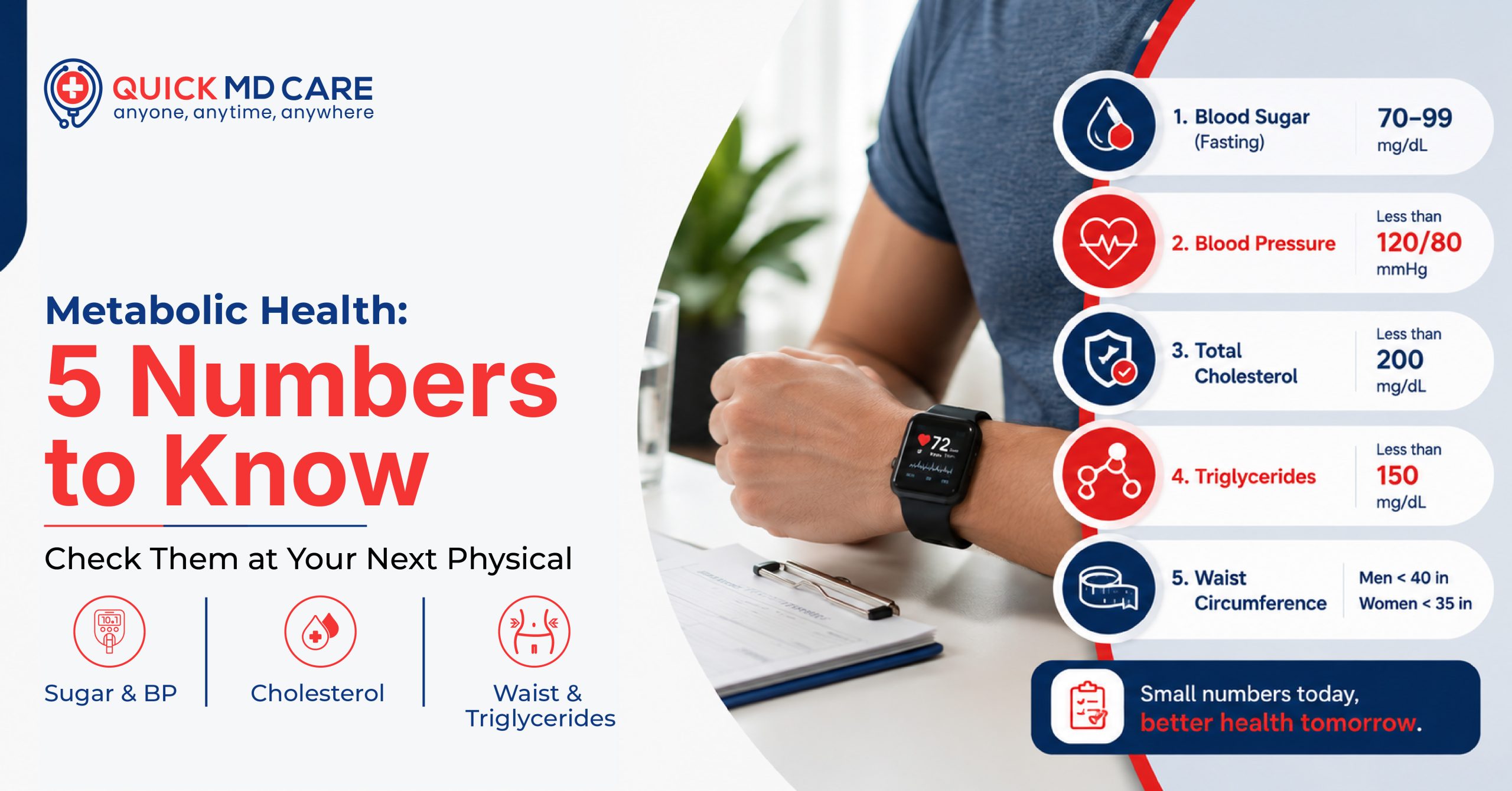
Employers are prioritizing health with annual screenings for chronic disease prevention at work.
With better health tech for employers, cardiovascular risk assessment and annual physicals can support early detection of health issues before they become critical.
Since annual healthcare assessments for employees have become highly in demand, QuickMD Care in Texas makes annual physical exams easy and convenient for working professionals.
Also, childhood and adult vaccinations help keep families safe and protected from disease.
Ultimately, preventive care strategies for U.S. employers in 2026 come with advantages like:
-
fewer sick days
-
a healthier and more productive workforce
-
lower long-term healthcare strain
Why this matters for employers: Preventive care can support early detection, reduce avoidable absences, and improve long-term workforce health.
2. Corporate Wellness Programs Are Expanding in 2026

Corporate health programs are upgrading with a stronger focus on mental healthcare from U.S. employers.
Corporate wellness programs in 2026 are evolving beyond step-counting challenges. Eight out of 10 employers say these programs play an important role in attracting top talent.
This year, corporate wellness trends in 2026 are delivering broader value, as 68% of employees want more flexibility. According to the NEEBC 2025 trends report, three-fourths of employees value benefits beyond salary.
What’s on the cards?
Mental health support: Employees can access therapy support, stress management tools, EAP improvements, and broader corporate health resources.
Weight management programs: Telemedicine trends in 2026 include medication support and nutrition counseling to help employees stay in shape. QuickMD Care’s weight loss management program also offers personalized plans for employees looking for sustainable and achievable results.
Disease prevention: Several conditions, including diabetes and other chronic diseases, can be better managed or prevented through earlier action.
In the end, financial wellness support can also contribute to better overall health by lowering financial stress.
This is where trusted wellness programs for employees in 2026 are no longer just a perk. They are becoming an important part of total compensation in a competitive environment.
Why this matters for employers: Broader wellness support can improve employee satisfaction, engagement, and retention.
3. Digital Health and Telemedicine Are Reshaping Access to Care
Reshaping telemedicine and digital health means better access from anywhere.
Digital health strategies for employers in 2026 have become an essential part of healthcare planning. Cigna’s 2026 trends coverage highlights stronger interest in personalization, AI, and connected care experiences.
What’s on the cards?
-
better personalized care for employees
-
health screenings through wearable integration and biometric screening
-
digital navigation platforms to help employees better understand costs
-
telemedicine support that can help reduce administrative burden and care delays
As Cigna notes, “Healthcare touches people in the most real and personal moments of their lives. Our job is to make those moments simpler, clearer, more connected and more human.”
Why this matters for employers: Digital health tools can improve access to care, reduce delays, and create a more convenient employee healthcare experience.
4. Smarter Healthcare Cost Management Is a Business Priority
Smarter strategies are needed for better management of healthcare costs.
How can employers manage healthcare costs in 2026? What is contributing to increasing costs?
Pharmacy-related spending continues to be a major healthcare cost driver, and those costs are increasing year after year. This is where stronger health-tech strategies for employees can help.
According to Cigna, integrated pharmacy and medical models can help employers reduce costs per member, with particularly significant savings potential in high-cost care areas such as oncology.
What’s on the cards?
Value-based contracts, healthcare insurance options for employees, and risk-sharing models can help buffer cost volatility.
This is where partnering with leading healthcare providers for employers in 2026, like QuickMD primary care, can help employees access same-day and affordable care, which may reduce unnecessary ER visits.
Why this matters for employers: Better healthcare cost management helps employers control spending while improving care access for employees.
5. Flexible and Personalized Benefits Are Becoming Essential
Providing flexible and personalized benefits is increasingly important because top talent looks for them.
As per reports, nearly 34% of employees are seeking job changes in 2026, and many companies are more concerned about employee retention. Without a doubt, healthcare insurance options for employees are required to evolve.
What’s on the cards?
Gen Z and millennials require mental health access, while baby boomers are prioritizing medical coverage and retirement-related support. This raises an important question: how can employers ensure healthcare benefits align with employee needs in 2026?
Companies are also being pushed to expand fertility and women’s health support. Menopause support is another area gaining attention, as many working women are seeking broader coverage.
This is why companies need to listen to the workforce and use data to provide better personalization.
As healthcare costs rise and employee expectations continue to evolve, employers that invest in preventive care, wellness support, digital access, and flexible benefits will be better positioned to build a healthier and more resilient workforce.
Why this matters for employers: Personalized benefits help companies better support different employee needs across age groups, life stages, and health priorities.
Future of Healthcare for Businesses and Employees: The End Note
Health management at work is being reshaped by rising costs, changing employee expectations, and evolving technology. Employers who invest in employee health programs in 2026 can see stronger retention, better productivity, and a healthier workforce.
If you are an employer looking for a healthcare partner to make the physical and mental well-being of your employees a priority, partner with QuickMD Care for comprehensive primary care, weight management, and vaccinations.
With health screenings for employees, you can help maintain employee health while preventing numerous diseases. If you need a healthcare partner, call 972-645-9400 or book an appointment online.
Frequently Asked Questions About Healthcare Trends for U.S. Employers in 2026
1. What are the top healthcare trends for 2026 in the U.S.?
The top healthcare trends for 2026 include AI-powered personalization, flexible benefits, integrated pharmacy and medical strategies, expanded preventive care, and stronger digital healthcare support. Cigna’s 2026 employer trends coverage supports these broader themes.
2. How can employers improve employee wellness in 2026?
Corporate wellness programs in 2026 can include chronic disease prevention, mental and physical health support, weight management, and personalized benefits. Many employees are placing increasing value on employer-sponsored health benefits as part of overall compensation.
3. What are the benefits of preventive care in the workplace?
Preventive care programs for businesses in 2026 can help manage long-term healthcare costs. With regular physical exams and screenings, the chances of identifying disease earlier can improve, which can support employee productivity.
4. How will healthcare cost management impact U.S. employers in 2026?
U.S. health spending grew 7.2% in 2024, and Aon projects the global medical trend rate at 9.8% for 2026. Integrated models, predictive analytics, and stronger care planning can help employers better understand and manage healthcare spending without compromising quality.
5. How can digital health trends affect businesses in 2026?
Digital health tools in 2026 include AI-driven navigation, telemedicine, and employee health monitoring, which can reduce administrative burden while improving care access and employee experience. Cigna’s 2026 trends coverage supports this direction.
Related Health Guides from QuickMD Care
Best School Physicals in McKinney, TX: Your Complete Guide:
https://www.quickmdcare.com/best-school-physicals-in-mckinney-tx-your-complete-guide/
Top 10 Budget-Friendly Protein Foods for Toddlers: Dietary Consult in McKinney, TX:
https://www.quickmdcare.com/top-10-budget-friendly-protein-foods-for-toddlers-dietary-consult-in-mckinney-tx/
Why Prenatal Visits Near McKinney, TX Are a Lifeline for Expecting Moms:
https://www.quickmdcare.com/why-prenatal-visits-near-mckinney-tx-are-a-lifeline-for-expecting-moms/
Well Child Care: Why Regular Checkups Matter for Your Child’s Health:
https://www.quickmdcare.com/well-child-care/
10 Iron-Rich Foods for Adults in 2026: Boost Your Energy and Health: https://www.quickmdcare.com/10-iron-rich-foods-for-adults-in-2026-boost-your-energy-and-health/
About QuickMD Care
QuickMD Care offers family-focused treatment, including highly qualified services in both pediatrics and adults under a single, well-equipped and patient-friendly clinic. The team provides patients with timely care in the most compassionate manner, including basic checkups and addressing unexpected issues. When families are seeking a reliable primary care physician McKinney or quick urgent care pediatrics McKinney, TX, they will find the quality and convenience of QuickMD Primary Care.
 10101 Westridge Blvd, Suite 101
McKinney, TX 75070
 Phone: 972-645-9400
 Website: quickmdcare.com Quick MD Care