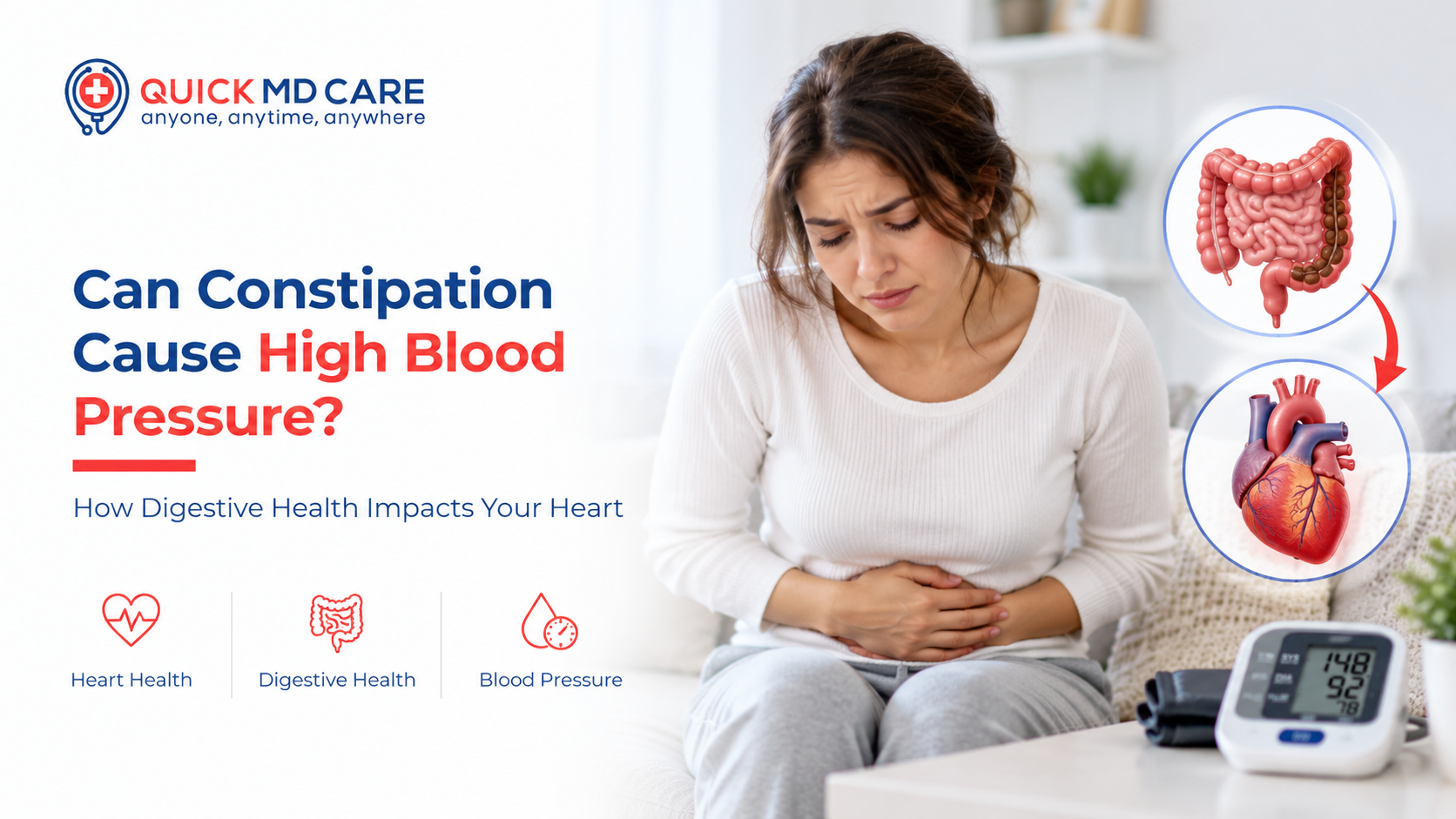
Did you know that straining during a bowel movement can temporarily afthe fect your blood pressure?
When you strain or hold your breath while pushing, your body undergoes a physiological response called the Valsalva maneuver. This can cause short-term changes in blood pressure and heart rate, particularly relevant for people with existing cardiovascular conditions.
Research has also identified an association between constipation and cardiovascular disease. However, these findings do not establish that constipation directly causes chronic hypertension or heart disease.
So, can constipation cause high blood pressure? Understanding how straining, medications and digestive health may affect blood pressure can help you recognize when medical evaluation is appropriate.
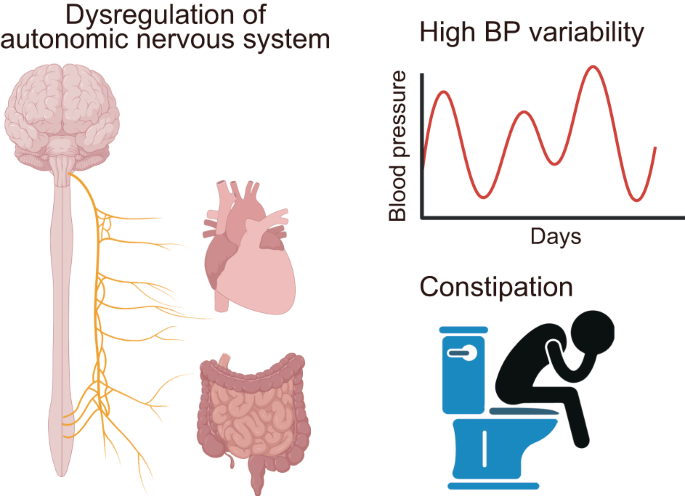
Let’s see a fact, The feedback loop looks like this
Someone starts a blood pressure med → medication may cause constipation → constipation may lead to straining → straining can cause temporary blood pressure changes → a doctor may review medications and recommend appropriate constipation management.
Round and round. Breaking the loop usually means treating the constipation directly, adjusting medication when possible, or switching to a different class.
Your gut and your heart aren’t two separate problemYour gut and your heart aren’t two separate parts of your health. They’ve been connected through complex physiological processes throughout your life, and understanding both can support better overall health.
If something in that just made you pause , the straining, the medication changes, the blood pressure creeping up , don’t close this tab.
Book a primary care appointment at QuickMD Care in McKinney, TX. One appointment can help your healthcare provider evaluate the digestive symptoms, blood pressure concerns, and medication changes you’ve been experiencing.
Chart 1: The research is clear , constipation raises CV risk
Sources: UK Biobank Constipation and Cardiac Events Study, AJP-Heart Circ Physiol 2024; Nationwide Real-World Cohort Study, JACC: Asia (verify exact citation before publishing).
Fast facts worth knowing
- 16% of U.S. adults live with chronic constipation
- 33% of adults over 60 experience it regularly
- 2x more common in women than men
- Up to 60% of people on certain blood pressure meds report constipation
- Straining can spike systolic BP by 30-70 mmHg in seconds
- The gut houses 100 trillion microbes , many of which produce compounds that regulate blood pressure
Sources: NIH PMC Constipation Review 2025; American Gastroenterological Association.
Quick Answer
Constipation can temporarily affect blood pressure, particularly through changes caused by straining during bowel movements. Researchers are also investigating longer-term connections involving the gut-heart axis, although a direct causal relationship with chronic hypertension has not been established. Chronic constipation is also associated with higher cardiovascular risk in large population studies. The good news: treating constipation may help reduce straining-related blood pressure fluctuations, although it does not replace hypertension treatment.
The problem most people don’t talk about
Nobody wants to bring up constipation at the dinner table. Or even in a doctor’s office, honestly.
So people live with it. They strain. They skip the fiber. They assume the discomfort is just a normal part of aging, stress, or whatever diet they’re currently blaming.
Meanwhile, if they’re also managing high blood pressure, taking medication for it, or in a high-risk cardiovascular group, the two conditions may share contributing factors or medication-related connections worth discussing with a healthcare provider.
Chart 2: Who Gets Constipation? Prevalence by Age
Source: NIDDK National Institute of Diabetes and Digestive and Kidney Diseases.
.Constipation and blood pressure concerns in older adults can occur together, making it particularly important to consider medication use, underlying conditions, and cardiovascular risk.
What is constipation, really?
Constipation isn’t just “didn’t go yesterday.” Clinically, constipation may involve fewer than three bowel movements per week, hard or lumpy stools, straining, incomplete evacuation, or needing manual help.
Classic constipation symptoms include:
- Fewer than 3 bowel movements per week
- Hard, dry, or lumpy stools
- Straining during bowel movements
- Feeling of incomplete evacuation
- Bloating, cramping, or abdominal discomfort
- Sense of blockage
Chronic constipation is the version that lasts for three months or longer.
What’s causing it (breakdown)
The most common constipation causes in primary care settings include the following, although the relative contribution varies between patients:
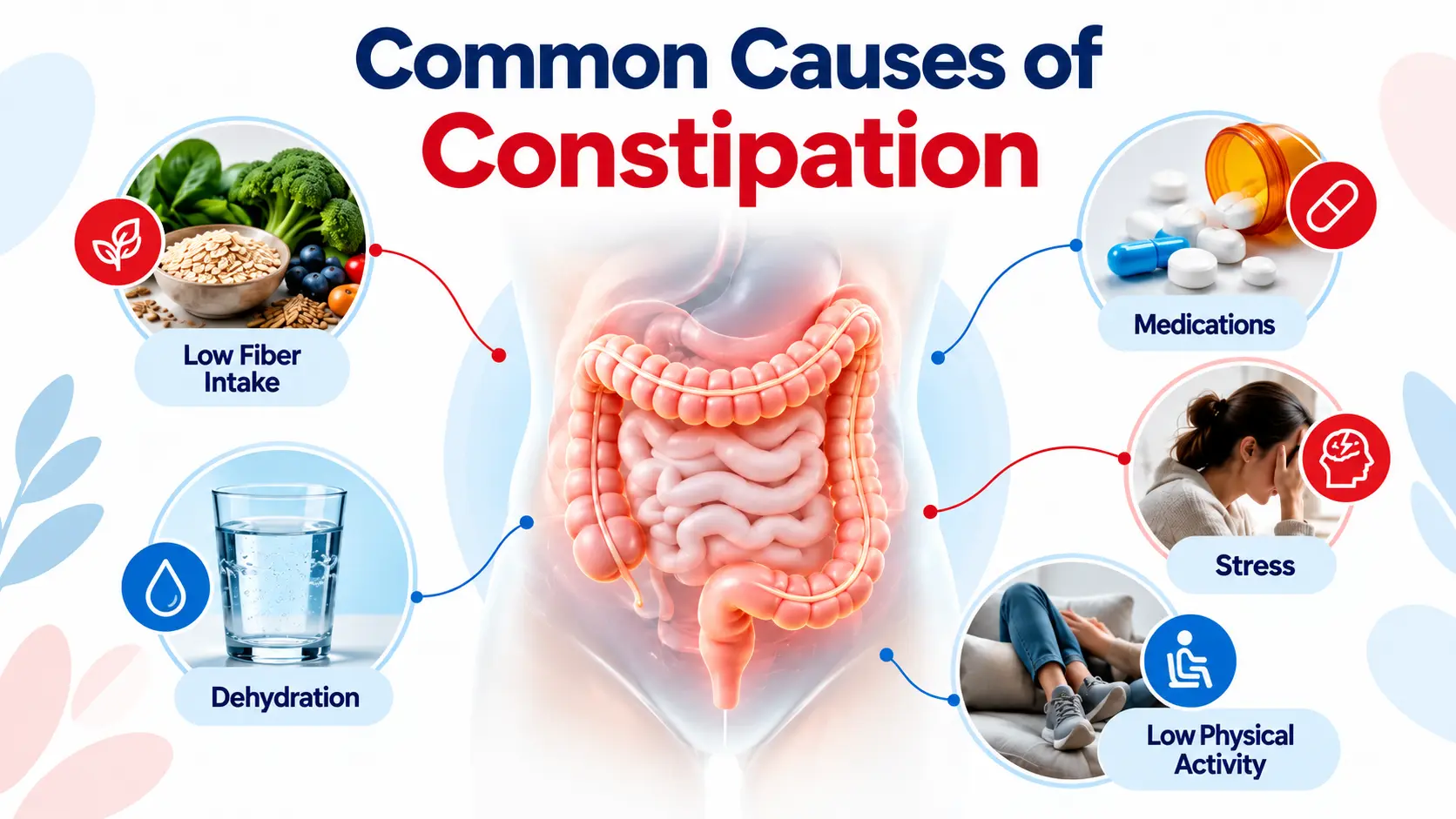
| Cause | Approximate share of cases |
| Low fiber + low fluid intake | ~35% |
| Medication side effects | ~20% |
| Sedentary lifestyle | ~15% |
| IBS or functional GI | ~12% |
| Hormonal / thyroid | ~8% |
| Ignoring the urge | ~5% |
| Other / mixed | ~5% |
Source: NIH PMC Clinical Review of Constipation Causes 2025.
Does constipation raise blood pressure? What the research actually says
Several large studies have found that constipation and hypertension cluster together more than chance would predict.
- A 2024 UK Biobank analysis published in AJP-Heart Circulatory Physiology linked constipation to a notably increased risk of major adverse cardiac events
- A 2025 JACC: Asia cohort study tracked incident cardiovascular disease and found meaningfully higher rates in people with constipation
- A 2025 Nature Hypertension Research review called the relationship between constipation and blood pressure “inseparable”
Chart 3: What happens to blood pressure during straining
Source: American Heart Association on Valsalva Maneuver and Hemodynamics; NIH PMC Blood Pressure Physiology Review.
Look at how blood pressure can change during straining. Systolic blood pressure may fluctuate during the Valsalva maneuver, with changes occurring during and after the strain is released.
Straining during bowel movements: the acute spike
Straining and blood pressure are physiologically connected through the Valsalva maneuver. When you bear down hard with your breath held, pressure inside the chest and abdomen increases.
- During the strain: systolic can rise 30-70 mmHg
- Immediately after: can drop sharply as blood return rushes to the heart
- For high-risk patients: rapid swings can trigger arrhythmia, fainting, or worse
High blood pressure after bowel movement is a real pattern that can show up on home monitoring.
Constipation from blood pressure medicine (and the reverse loop)
Many blood pressure medications cause constipation. Which creates a dangerous feedback loop.
Chart 4: Blood pressure medications and potential constipation side effects
Sources: NIH LiverTox Clinical and Research Database; AHA Hypertension Clinical Guidelines.
Calcium channel blockers can contribute to constipation, particularly verapamil. If new constipation shows up after a BP med change, that’s worth bringing to your doctor.
Managing constipation with high blood pressure
Managing constipation with high blood pressure means addressing both at the same time.
Daily foundations:
- Fiber for constipation , 25-30 grams per day from whole foods
- Water , at least 8 cups daily
- Movement , 20-30 minutes of walking helps bowel motility
- Regular toilet routine , same time daily, often after breakfast
- Don’t ignore the urge , delayed trips make stool harder
- Limit processed foods , low fiber, high sodium, bad for both conditions
Chart 5: Fiber intake vs. constipation risk
Source: NIH Office of Dietary Supplements – Fiber Fact Sheet.
Adequate fiber intake can help support bowel regularity. Adults generally need 22–34 grams of fiber daily, depending on age and sex, although individual requirements vary.
How to avoid straining during bowel movements:
- Use a footstool to raise your knees above hips (mimics squatting)
- Breathe through the movement , don’t hold your breath
- Don’t rush, don’t force
- If nothing happens in a few minutes, come back later
- Address constipation at the source rather than straining through it
Chronic constipation treatment: the ladder
First line: dietary fiber, hydration, physical activity, fiber supplements (psyllium, methylcellulose)
Next step: osmotic laxatives (polyethylene glycol / MiraLAX, lactulose), stool softeners (docusate), occasional stimulant laxatives (bisacodyl, senna)
Prescription options: linaclotide, lubiprostone, plecanatide, prucalopride , for chronic idiopathic constipation that doesn’t respond to over-the-counter treatment
Any treatment plan for someone with hypertension should factor in medication interactions and sodium content of laxatives.
When should you see a doctor for constipation?
- Constipation lasting more than 2-3 weeks despite diet changes
- Recent change in bowel habits
- Blood in the stool
- Unintentional weight loss
- Severe abdominal pain
- Over 50 with new-onset constipation
- Blood pressure changes alongside constipation
- Constipation started after a new medication
- Over-the-counter remedies aren’t helping
Searching for a constipation doctor near me or a primary care doctor for constipation usually means it’s past the “try more fiber” stage.
Concerned About Constipation or Blood Pressure?
QuickMD Care provides primary care services in McKinney, TX. Speak with the clinic about persistent symptoms, medication concerns and appropriate next steps.
Common myths and FAQs
Does blood pressure change when you poop?
Yes. During straining, systolic pressure can rise sharply. Immediately after, it can drop.
Can constipation cause permanent hypertension?
Not from a single episode. But chronic constipation is linked in large studies to higher long-term cardiovascular and blood pressure risk.
Can treating constipation lower blood pressure?
Often yes , especially when straining was contributing to spikes.
Which blood pressure medicines cause constipation?
Calcium channel blockers (especially amlodipine, verapamil) are the main culprits. Diuretics contribute through dehydration.
Are laxatives safe with high blood pressure?
Osmotic laxatives like polyethylene glycol are generally safe. Avoid high-sodium laxatives if sodium is restricted.
Can stool softeners affect blood pressure?
Docusate and similar stool softeners generally don’t affect blood pressure.
When should you see a doctor for constipation?
When it’s lasted more than 2-3 weeks, there’s blood or weight loss, you’re over 50 with new-onset symptoms, or OTC treatments aren’t working.
How QuickMD Care supports digestive and cardiovascular health in McKinney
If you’re in McKinney, Frisco, Allen, or Plano and dealing with chronic constipation, blood pressure concerns, or both , QuickMD Care is a straightforward place to start.
The primary care team handles both ends of this picture , digestive evaluation, blood pressure monitoring, medication reviews. Full clinic services also cover on-site diagnostics and chronic disease management.
For anyone searching for a constipation doctor near me, a primary care doctor near me, or a high blood pressure doctor near me who connects the dots across systems , this is that kind of visit.
Where the trustworthy guidance comes from
- UK Biobank constipation and cardiovascular events study (AJP-Heart Circ Physiol, 2024)
- Nationwide Real-World Cohort Study on Constipation and Cardiovascular Disease (JACC: Asia, 2025)
- Hypertension Research 2025 review on constipation and blood pressure (Nature)
- NIH PMC , Constipation: More Than a Quality-of-Life Issue (2025)
- Baylor Scott & White Health clinical overview
- NIH PMC database for underlying research
Here’s what no one tells you clearly enough
You don’t get to a heart event overnight. It builds. Quietly. Through the small things you kept meaning to deal with.
- The constipation you’ve managed with coffee and willpower
- The blood pressure that’s “a little high but nothing crazy”
- The new med that threw off your bowel habits
- The straining you’ve started considering normal
- The headaches, the fatigue, the “I’ll deal with it later”
None of it feels like an emergency.
Right up until it is.
More From QuickMD Care
Primary care, hypertension management, and preventive checkups – Primary Care Services
Full list of clinic services including labs and diagnostics – Services Overview
Family and pediatric care – Pediatric Care
Best School Physicals in McKinney, TX: Your Complete Guide:
https://www.quickmdcare.com/best-school-physicals-in-mckinney-tx-your-complete-guide/
Top 10 Budget-Friendly Protein Foods for Toddlers: Dietary Consult in McKinney, TX:
https://www.quickmdcare.com/top-10-budget-friendly-protein-foods-for-toddlers-dietary-consult-in-mckinney-tx/
Why Prenatal Visits Near McKinney, TX Are a Lifeline for Expecting Moms:
https://www.quickmdcare.com/why-prenatal-visits-near-mckinney-tx-are-a-lifeline-for-expecting-moms/
Well Child Care: Why Regular Checkups Matter for Your Child’s Health:
https://www.quickmdcare.com/well-child-care/
10 Iron-Rich Foods for Adults in 2026: Boost Your Energy and Health: https://www.quickmdcare.com/10-iron-rich-foods-for-adults-in-2026-boost-your-energy-and-health/
AAP Releases its Recommended 2026 Childhood and Adolescent Immunization Schedule – Don’t Miss:https://www.quickmdcare.com/aap-releases-its-recommended-2026-childhood-and-adolescent-immunization-schedule/
Swimmer’s Ear vs. Ear Infection in Kids: Summer Signs Parents Shouldn’t Ignore : https://www.quickmdcare.com/swimmers-ear-vs-ear-infection-in-kids-summer-signs-parents-shouldnt-ignore/
Best Summer Foods for Adults & Kids: Stay Hydrated, Energized, and Healthy:https://www.quickmdcare.com/best-summer-foods-for-adults-kids-stay-hydrated-energized-and-healthy/
Summer Sports Injuries in Kids: When Pain or Swelling Needs an X-Ray: https://www.quickmdcare.com/summer-sports-injuries-in-kids-when-pain-or-swelling-needs-an-x-ray/
High Blood Pressure at Home: When Should You See a Doctor? : https://www.quickmdcare.com/high-blood-pressure-at-home-when-should-you-see-a-doctor/
Back-to-School Pediatric Checklist: Health Signs Parents Should Review: https://www.quickmdcare.com/back-to-school-pediatric-checklist-for-mckinney-parents/
What Is Metabolic Health? 5 Numbers Adults Should Check at Their Next Physical: https://www.quickmdcare.com/what-is-metabolic-health-5-numbers-adults-should-check-at-their-next-physical/
Teen Always Tired? New 2026 Iron Deficiency Screening Guidance Parents Should Know : https://www.quickmdcare.com/teen-always-tired-new-2026-iron-deficiency-screening-guidance-parents-should-know/
New Cholesterol Guidelines for 2026: Do You Need an Lp(a) Test at Your Next Physical? : https://www.quickmdcare.com/new-cholesterol-guidelines-for-2026-do-you-need-an-lpa-test-at-your-next-physical/
The people whose stories end well all have one thing in common , someone looked at the full picture before it was too late.
That person can be your doctor at QuickMD Care in McKinney.
Call (972) 645-9400 or book online in 60 seconds.
Tell the team:
- Your bowel history
- Your BP readings
- Every medication you take
- Anything that’s felt off lately
That’s it. One visit covers it all.
Because this is the sentence you don’t want to say:
“I wish I’d gone in sooner.”
Every patient who’s survived a cardiovascular event has said some version of that.
You still have the chance to not be one of them.
Book your QuickMD Care visit today , your heart has been talking to you through your gut for a long time.
Let someone finally listen.
About QuickMD Care
QuickMD Care offers family-focused treatment, including highly qualified services in both pediatrics and adults under a single, well-equipped and patient-friendly clinic. The team provides patients with timely care in the most compassionate manner, including basic checkups and addressing unexpected issues. When families are seeking a reliable primary care physician McKinney or quick urgent care pediatrics McKinney, TX, they will find the quality and convenience of QuickMD Primary Care.
10101 Westridge Blvd, Suite 101
McKinney, TX 75070
New location : Avondale/Haslet ,Texas -76052
Phone: 972-645-9400
Website: quickmdcare.com Quick MD Care