Intro
Summer in Texas is different. By 11 a.m. the heat’s already heavy, by 3 p.m. the kids look wilted, and by dinner everyone’s vaguely cranky and reaching for a third glass of something cold.
It’s not just in your head. The CDC reports that heat-related ER visits jumped sharply in 2023’s warm-season months, with prolonged spikes across multiple regions. And the agency points out — infants and young children rely entirely on the adults around them to stay cool and hydrated when it’s hot outside.
Water helps. But it’s only half the job. The other half? Food. The right summer foods do quiet, important work — replacing fluids you didn’t even realize you were losing, restocking electrolytes, and keeping energy steady when the sun is trying to drain it.
Here’s the easy, real-world version of what to actually eat — for kids and adults — when the temperature climbs.
The Short Version
The best summer iron rich foods are mostly the ones already in season. Watermelon. Cucumber. Berries. Yogurt. Light salads. Cold soups. Things that are 80-95% water and don’t sit heavy in the stomach.
Heavy, greasy, deep-fried meals slow you down. Sugary drinks dehydrate more than they help. The simplest rule — if it grows in summer, it probably belongs on the summer plate.
Why Food Matters as Much as Water
Most people think hydration = drinking water. That’s only part of it.
About 20% of daily fluid intake comes from food, according to most clinical nutrition references. In summer, that number matters more. Sweat doesn’t just take water — it takes sodium, potassium, and other electrolytes with it. Water alone can’t replace all of that.
The CDC notes that dehydration in heat brings symptoms like dizziness, headache, muscle cramps, rapid heart rate, and dark urine. For kids — who sweat differently than adults and don’t always recognize thirst — it can sneak up faster.
Foods to prevent dehydration aren’t a trend. They’re a practical, daily backup for everything water can’t do on its own.
The Best Summer Foods, Broken Down
Some foods are summer staples for a reason. They cool, they hydrate, and they taste like the season.
Watermelon. About 92% water. Naturally sweet, full of electrolytes, and basically engineered for summer hydration. Watermelon for hydration is the unofficial mascot of the season for good reason.
Cucumber. Around 95% water. Mild, crunchy, almost zero calories. Cucumber for hydration works in salads, in cold soups, or just sliced with a pinch of salt and lemon.
Oranges and citrus. Oranges are roughly 87% water and packed with vitamin C and potassium. Oranges for hydration are an easy mid-afternoon snack.
Berries. Strawberries (91% water), blueberries, raspberries. Loaded with antioxidants and natural sugars that give energy without a crash.
Tomatoes. About 94% water. The base of countless light summer meals. Also a quiet source of lycopene.
Lettuce and leafy greens. Iceberg is 95% water. Romaine, butter lettuce, spinach — all high water content and easy to build a meal around.
Yogurt. The cool, creamy hero. Yogurt for summer delivers protein, probiotics, calcium, and water in one snack. Greek yogurt has more protein; regular yogurt has more water.
Coconut water. Natural electrolytes. Good post-play recovery for kids and adults both.
Buttermilk and lassi. Traditional summer drinks across many cultures for a reason — they cool, hydrate, and aid digestion.
These are the foundation. Build around them and most of the hydration math takes care of itself.
Best Summer Foods for Adults Health
Adult bodies need a slightly different rhythm in summer. Less heaviness, more frequent small meals, more rich foods for adults.
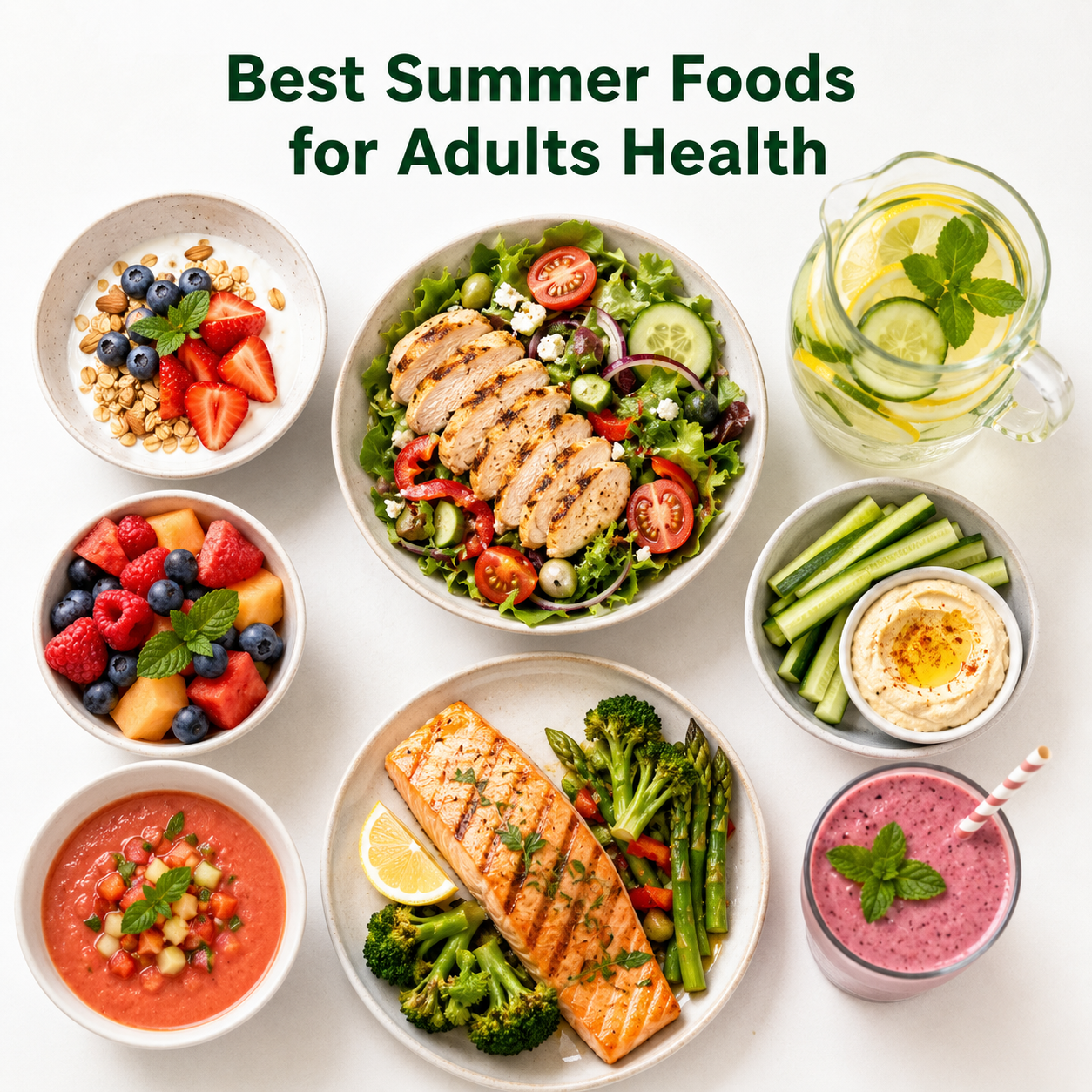 A practical summer diet for adults looks like:
- Breakfast — fruit + yogurt + a handful of nuts or oats. Smoothies count. Skip the bacon-and-pancakes routine on 100-degree days.
- Lunch — salads with grilled chicken, fish, or chickpeas. Cold grain bowls. Wraps with leafy greens and hummus.
- Snack — sliced melon, a cup of berries, cucumber with hummus, buttermilk, or a smoothie.
- Dinner — grilled fish or chicken with a vegetable side. Gazpacho or cold soups. Stir-fries with light sauces.
- Throughout the day — water, infused water (lemon-mint-cucumber is classic), coconut water, herbal iced teas.
Light summer meals for adults beat heavy ones on every front. Energy stays even, digestion stays comfortable, and the post-lunch crash doesn’t show up.
For anyone working out or active outdoors — add electrolyte foods for summer: bananas (potassium), nuts (magnesium), olives (sodium), yogurt (sodium and potassium).
And protein foods for summer still matter. Grilled fish, lean chicken, eggs, lentils, tofu, beans. The myth that summer means cutting protein isn’t true — the body still needs it. Just lighter preparations.
Best Summer Foods for Kids
Kids are the harder challenge. They’re hot, they’re running around, and they often won’t stop playing to drink water. Food becomes the sneaky way to keep them hydrated.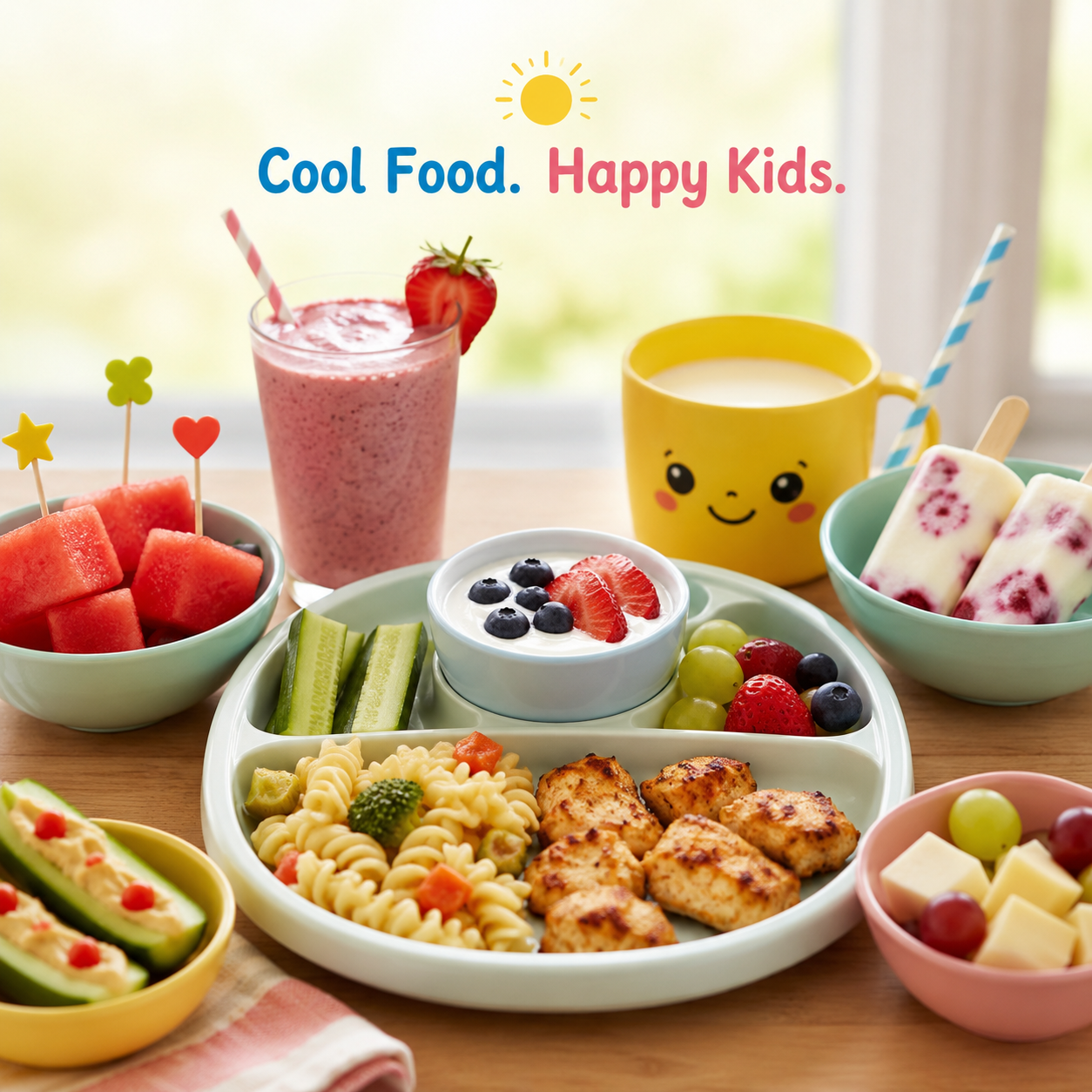
A practical summer diet for kids leans into things they’ll actually eat:
- Breakfast — yogurt parfaits, fruit smoothies, whole-grain cereal with milk and berries, idli or upma with chutney.
- Lunch — sandwiches with cucumber, tomato, and hummus. Cheese cubes with fruit. Light pasta salads. Roti rolls with veggies.
- Snacks — this is where the action is. Healthy summer snacks for kids include frozen yogurt pops, watermelon cubes on toothpicks, cucumber boats, cheese and grapes, smoothie popsicles, chilled milk with a date.
- Dinner — grilled chicken nuggets (real, not frozen), pasta with light sauce, dal-rice, or a kid-friendly salad with familiar veggies.
- Beverages — water, milk, coconut water, fresh juice diluted with water, buttermilk.
Smoothies for kids in summer are the secret weapon. Banana, berries, yogurt, milk or coconut water, a handful of spinach if you can get away with it. Three macros and a lot of water in one cup.
Healthy foods for kids in summer should be cold, colorful, and easy. If it looks like a chore, it won’t get eaten. If it looks like a treat, the battle is over.
Foods That Help When the Heat Wins
Some days, despite everything, someone in the family hits a wall. Tired, headachy, drained. That’s when targeted foods for summer fatigue and dehydration matter most.
- Coconut water — natural electrolytes, easy on the stomach.
- Bananas — fast potassium, easy energy.
- Oral rehydration drinks — for moderate dehydration in kids, pediatricians often recommend these over plain water.
- Curd or yogurt — cooling, electrolyte-supportive, gentle on digestion.
- Buttermilk with a pinch of salt — a classic for a reason.
- Watermelon juice — instant fluid plus natural sugars.
- Light vegetable broths — sodium and fluids without heaviness.
What to eat when feeling weak in summer doesn’t need to be complicated. Small portions, water-rich, low effort to digest. Skip the heavy lunch and rebuild slowly.
Foods (and Drinks) to Skip or Limit
A short list, but a useful one:
- Sugary sodas and excess juice may not hydrate as well as water or electrolyte-rich foods and can add unnecessary sugar, especially for kids. The CDC specifically notes that high-sugar, high-sodium, and caffeinated drinks can worsen dehydration.
- Heavy fried foods — slow digestion, raise body heat, drain energy.
- Excess caffeine — small amounts are fine for adults, but mid-afternoon iced lattes shouldn’t replace water.
- Salty processed snacks — chips, packaged crackers, instant noodles. Sodium overload without the hydration to balance it.
- Alcohol — dehydrating, especially in heat.
- Spicy, oily takeout — fine occasionally; rough as a daily routine in summer.
For kids especially, watch the juice boxes. Most are sugar bombs that don’t actually hydrate well.
For Kids Who Won’t Drink Enough Water
This is the most common parent complaint in summer. Healthy foods for kids who don’t drink enough water can fill the gap, but it takes some creativity.
A few approaches that actually work:
- Make water exciting — colorful water bottles, fun straws, infused water with berries or citrus floating in it.
- Build snacks around water-rich fruits — watermelon, oranges, grapes, strawberries, melon balls.
- Serve soups, even cold ones — gazpacho, cucumber soup, light dal.
- Popsicles made from real fruit and yogurt — count as snack and hydration both.
- Smoothies as snacks — a 12-oz smoothie can deliver 8 oz of fluids alongside fruit and protein.
- Milk and yogurt regularly — most kids drink milk more reliably than water.
- Set a “drink check” routine — every hour during outdoor play, everyone pauses for a sip.
It’s not a single fix. It’s a stack of small habits.
A Simple Summer Eating Checklist
Keep this in mind, week to week:
- Half the plate, fruits and vegetables. Especially water-rich ones.
- Lean protein at every main meal — eggs, fish, chicken, lentils, tofu, paneer.
- Whole grains in moderation — rice, oats, whole-wheat bread, millets.
- Yogurt or curd at least once a day for gut health and hydration.
- Two to three snacks through the day, not big meals far apart.
- Hydrating drink with every meal — water, buttermilk, infused water.
- One cold or chilled item per meal — keeps body temp comfortable.
- Smaller dinner than lunch, eaten earlier when possible.
Nothing radical. Just a small shift from winter eating to summer eating.
Common Summer Eating Mistakes
The patterns that show up in clinics every June: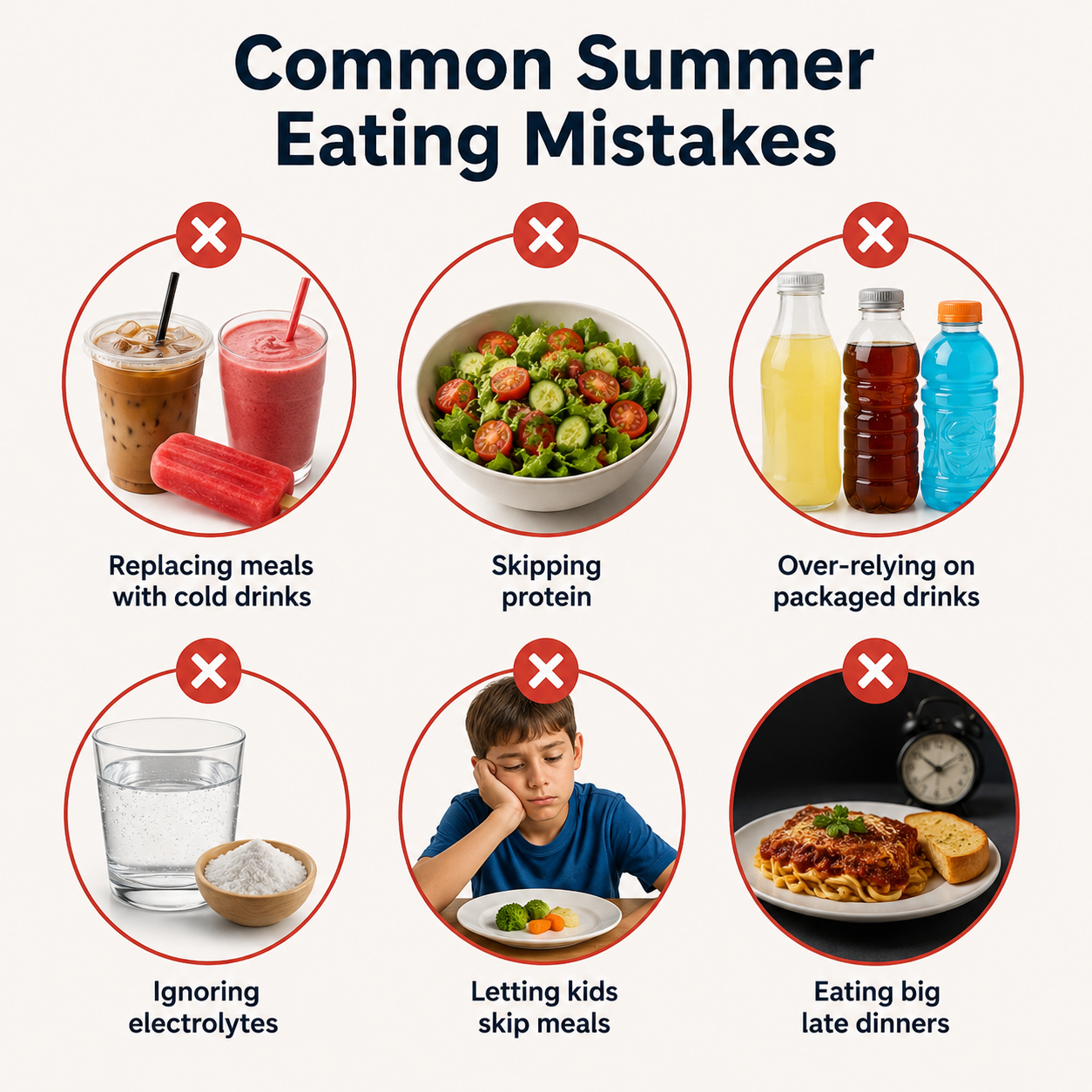
- Replacing meals with cold drinks. Iced coffee for breakfast, smoothie for lunch, popsicle for dinner. Calories drop, energy crashes.
- Skipping protein. People eat lighter, then forget to add back enough protein. Fatigue follows.
- Over-relying on packaged “summer drinks.” Bottled lemonades, sweetened iced teas, sports drinks for casual sipping. Mostly sugar.
- Ignoring electrolytes. Drinking plain water all day after heavy sweat sessions can actually drop sodium too low.
- Letting kids skip meals. “I’m not hungry, it’s hot” turns into low energy by dinner. Smaller meals, more often, work better.
- Eating big late dinners. Heavy meals close to bedtime are uncomfortable in summer heat.
When to See a Doctor for Dehydration
Most mild dehydration sorts itself out with rest, shade, and the right foods or fluids. But some signs shouldn’t be waited out.
Get medical attention if there’s:
- Persistent dizziness, fainting, or confusion.
- Rapid heart rate or rapid breathing that doesn’t settle.
- Severe headache with nausea.
- No urination for 8+ hours in an adult, or 6+ in a child, or a baby with no wet diaper for 3-4 hours.
- Sunken eyes or dry mouth and tongue in a child.
- Vomiting or diarrhea that won’t stop, especially in kids and older adults.
- Muscle cramps that won’t ease even after rest and fluids.
- Cool, clammy skin or absence of sweating in someone overheated.
The CDC lists these as signs of dehydration and heat illness that warrant urgent care. Don’t try to push through it. When to see a doctor for dehydration is really about not letting mild slide into moderate.
QuickMD Care’s primary care providers in McKinney handle summer dehydration cases routinely same-day visits, IV hydration if needed, and a real evaluation rather than a quick brush-off.
Questions People Actually Ask
1.What foods help prevent dehydration in summer?
Water-rich produce watermelon, cucumber, oranges, berries, lettuce, tomatoes, plus yogurt, buttermilk, coconut water, and light soups. Foods 80%+ water do the most lifting.
2.What are the best foods to stay hydrated in summer? Fruits with high water content (watermelon, melons, citrus, berries), vegetables (cucumber, tomato, leafy greens), dairy (yogurt, milk, buttermilk), and natural beverages (coconut water).
3.What foods should kids eat in summer?
Lots of fruits, yogurt and milk, smoothies, light wraps and sandwiches, cold pasta salads, and frequent small snacks. Healthy summer snacks for kids like frozen yogurt pops and cucumber sticks make hydration easier.
4.What should adults eat in hot weather?
Lighter meals, more frequent. Salads, grilled lean proteins, fruits, yogurt, cold soups. Avoid heavy fried foods and limit alcohol and caffeine.
5.Are smoothies actually hydrating?
Yes, especially fruit and yogurt-based ones. They deliver fluids, electrolytes, vitamins, and protein in one go.
6.Can I just drink more water and skip the food changes?
Water helps, but it doesn’t replace electrolytes lost through sweat. Food fills that gap. Both matter.
7.What about sports drinks for kids?
For most kids, water and food cover hydration. Sports drinks make sense for prolonged, intense activity (over an hour of heavy sweating) not casual play.
8.How much water should an adult drink in summer?
Most adults need 2-3 liters daily, more if active or outdoors. Combined with hydrating foods, this is usually enough.
Trust and Real Guidance
Anything you read about summer nutrition should come back to fundamentals — water-rich foods for adults, balanced protein, regular small meals, electrolyte awareness. Not fads.
The CDC, the American Academy of Pediatrics, and clinical nutrition references all align on the basics. Max Healthcare and Sarvodaya Hospital both publish patient guidance that mirrors what frontline pediatricians and family doctors recommend eat seasonally, stay hydrated, and watch for warning signs.
When in doubt, the best advice usually comes from the family’s regular primary care provider someone who knows the kids, knows the medical history, and can tell whether that headache is a hydration issue or something else.
Ready to Talk to a Doctor?
If summer fatigue, recurring dehydration, or a sick kid who can’t keep fluids down isn’t improving don’t wait.
More From QuickMD Care
Pediatric care, well-child visits, and immunizations in McKinney: Pediatric Care
Primary care and wellness exams for teens and adults: Primary Care Services
Full list of clinic services: Services Overview
Best School Physicals in McKinney, TX: Your Complete Guide:
https://www.quickmdcare.com/best-school-physicals-in-mckinney-tx-your-complete-guide/
Top 10 Budget-Friendly Protein Foods for Toddlers: Dietary Consult in McKinney, TX:
https://www.quickmdcare.com/top-10-budget-friendly-protein-foods-for-toddlers-dietary-consult-in-mckinney-tx/
Why Prenatal Visits Near McKinney, TX Are a Lifeline for Expecting Moms:
https://www.quickmdcare.com/why-prenatal-visits-near-mckinney-tx-are-a-lifeline-for-expecting-moms/
Well Child Care: Why Regular Checkups Matter for Your Child’s Health:
https://www.quickmdcare.com/well-child-care/
10 Iron-Rich Foods for Adults in 2026: Boost Your Energy and Health: https://www.quickmdcare.com/10-iron-rich-foods-for-adults-in-2026-boost-your-energy-and-health/
AAP Releases its Recommended 2026 Childhood and Adolescent Immunization Schedule – Don’t Miss:
Swimmer’s Ear vs. Ear Infection in Kids: Summer Signs Parents Shouldn’t Ignore : https://www.quickmdcare.com/swimmers-ear-vs-ear-infection-in-kids-summer-signs-parents-shouldnt-ignore/
Bottom Line
The best summer foods aren’t complicated. They’re the ones that grow in summer. Watermelon and cucumber, berries and yogurt, light meals and small frequent snacks.
For kids especially, food does what water alone can’t, it sneaks hydration in when they’re too busy playing to stop and drink. For adults, lighter meals keep energy steady when the heat is doing its best to flatten it.
Eat with the season, stock the fridge with water-rich produce, and don’t be the family running on iced coffee and snack mix by August. And if something feels off a kid who’s lethargic, an adult with a stubborn headache that won’t ease that’s the moment to call a provider. QuickMD Care in McKinney is set up exactly for that.
About QuickMD Care
QuickMD Care offers family-focused treatment, including highly qualified services in both pediatrics and adults under a single, well-equipped and patient-friendly clinic. The team provides patients with timely care in the most compassionate manner, including basic checkups and addressing unexpected issues. When families are seeking a reliable primary care physician McKinney or quick urgent care pediatrics McKinney, TX, they will find the quality and convenience of QuickMD Primary Care.
10101 Westridge Blvd, Suite 101
McKinney, TX 75070
 Phone: 972-645-9400
 Website: quickmdcare.com Quick MD Care