Your teen isn’t lazy. They might just be running on empty , literally.
You’ve had the conversation. Probably more than once. Your teenager slept ten hours and still can’t drag herself out of bed for school. She’s snapping at everyone by 4 p.m. Her grades are slipping. You wonder if it’s her phone, her friends, her hormones, her sleep habits.
And it might be one of those. But it might also be something quieter , and completely fixable , that most parents never think to check.
Iron deficiency. Not full-blown anemia yet. Just low iron, silently draining the energy out of a growing kid whose body is asking for way more of it than she’s taking in.
The CDC’s most recent NHANES data (August 2021 to August 2023) shows that 17.4% of adolescent girls ages 12-19 in the U.S. are anemic , the highest rate of any female age group in the country. That’s roughly 1 in 6 teenage girls, walking around exhausted, and most of them have no idea why.
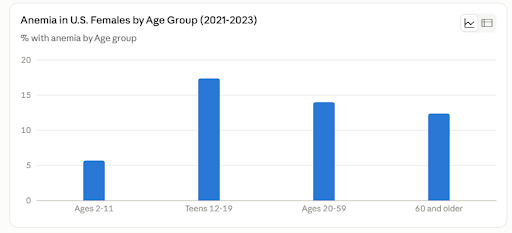
Source: CDC/NCHS NHANES Data Brief No. 519, December 2024.
Teenage girls have the highest anemia rate of any female age group , higher than women over 60. And that’s just the ones who’ve already crossed into full anemia. Iron deficiency without anemia is even more common, and it shows up first as fatigue, mood changes, brain fog, and difficulty concentrating.
So if your teen has been dragging, cranky, and constantly tired , this is worth reading.
What is iron deficiency, really?
Iron is one of the most basic things the body runs on. It’s what your blood uses to carry oxygen to every cell , muscles, brain, everything. Without enough of it, the whole system slows down.
Iron deficiency happens in stages. First, iron stores start to drop (measured by ferritin). Then blood iron itself falls. Then finally, hemoglobin drops , and that’s when it becomes iron deficiency anemia.
Here’s the key thing most people miss. You don’t have to be anemic to be iron deficient. The tiredness and brain fog often show up long before the blood count itself changes.
Quick facts:
- Teens need more iron than adults do, especially during growth spurts
- Adolescent girls need iron for menstruation
- Adolescent boys need iron for muscle growth and increased blood volume during puberty
- Girls typically need about 15 mg of iron per day; boys need about 11 mg
- Most American teens fall well short of that
Why teens are especially vulnerable
There’s a reason iron deficiency hits so hard in the teenage years. It’s basically the perfect storm.
- Rapid growth , teens can grow 3-4 inches in a year, and every inch needs more blood volume, more muscle, more iron
- Puberty , hormonal shifts increase iron demands
- Menstruation , girls lose iron every month, and heavy periods lose a lot
- Sports , athletes lose iron through sweat and micro-trauma from repetitive impact
- Diet changes , many teens skip meals, try vegetarian or vegan diets, or live on processed carbs
- Increased brain and cognitive demands , school, screens, learning all require iron-hungry brain function
Add all that up and it’s not surprising that adolescence is when iron deficiency quietly peaks in girls. A 2023 JAMA study on U.S. females ages 12-21 found that nearly 40% had some form of iron deficiency , with or without anemia. That’s almost half of adolescent girls in the country.
Boys aren’t immune either. While rates are lower, teen boys going through big growth spurts or heavy athletic training can absolutely become iron deficient.
Iron deficiency symptoms in teens (what parents often miss)
The classic image of anemia is someone pale and weak, but that’s the late stage. Early iron deficiency is much sneakier.
Common signs of iron deficiency in teens:
- Constant fatigue , sleeping a full night and still exhausted
- Difficulty concentrating , grades slipping, brain fog, “spacey” behavior
- Mood changes , irritability, low mood, snappiness
- Pale skin, especially inside the lower eyelids or lips
- Headaches or lightheadedness
- Dizziness, especially when standing up
- Cold hands and feet
- Shortness of breath with exercise or stairs
- Brittle nails or hair falling out more than usual
- Restless legs at night
- Craving ice or non-food items (a specific symptom called pica)
- Getting sick more often
For teenage girls specifically, watch for anemia symptoms in teenage girls that cluster together , fatigue plus dizziness plus heavy periods is a classic combination.
Can low iron make a teenager tired? Yes. Profoundly. Iron deficiency is one of the most common , and most missed , causes of persistent teen fatigue.
Why is my teenager always tired? The iron deficiency link
Every parent has asked this. Sometimes it’s screen time or bad sleep habits. Sometimes it’s depression or anxiety. Sometimes it’s mono or a thyroid issue.
But iron deficiency is on that list, and it’s one of the easiest to check and treat. So if fatigue has been going on for weeks or months , especially with any of the other symptoms above , it’s worth ruling out.
The Mayo Clinic notes that iron deficiency in children and teens can affect academic performance, behavior, energy, and even physical development if it’s severe enough or persists long enough.
The scary part is that even mild iron deficiency , the kind that doesn’t yet show up as anemia , can affect brain function, attention, and school performance. Research published in PMC on iron deficiency and cognitive function has consistently linked low iron to impaired cognition and poorer academic performance in school-aged children and adolescents.
Can heavy periods cause anemia in teenagers?
Absolutely , and it’s one of the top causes.
Girls who have heavy periods (called menorrhagia) can lose enough blood monthly to run through their iron stores faster than they can replace them through diet alone. Over a few cycles, that adds up to significant iron loss.
Signs of heavy periods to pay attention to:
- Soaking through a pad or tampon in an hour or less
- Periods lasting more than 7 days
- Bleeding through clothes or sheets
- Passing large blood clots
- Needing to change protection at night
- Feeling faint or lightheaded during periods
- Cramps severe enough to miss school
If your daughter has any of the above, that’s not “just normal periods.” It’s a sign her body is losing more blood than is healthy, and iron testing should absolutely be part of the conversation.
Research from a 2024-2025 cross-sectional study on iron deficiency in teenage girls after menarche found that 33% of teen girls with anemia had moderate or severe cases , meaning it had progressed well beyond a mild issue.
How do you test for iron deficiency in teens?
Testing is simple. It’s a blood draw, and it usually includes:
- CBC (complete blood count) , measures hemoglobin, hematocrit, and red blood cell size
- Ferritin blood test , measures iron stores (this is the most important early marker)
- Serum iron , measures iron currently in the blood
- Total iron binding capacity (TIBC) , measures how much iron the blood can transport
- Transferrin saturation , a percentage that shows how much iron is being carried
Ferritin is the key one. It drops before anemia shows up, so it’s the early warning. A ferritin below 15-30 ng/mL usually indicates iron deficiency, even if the CBC still looks “normal.”
Should teenagers be screened for iron deficiency? The American Academy of Pediatrics has increasingly emphasized screening, especially for adolescent girls after menarche and for teens with any risk factors. Universal screening isn’t yet standard everywhere, but a growing consensus supports it.
Ask specifically for ferritin if your teen is being tested. It’s not always automatically included in a basic anemia workup.
Iron-rich foods for teenagers
Diet is the first line of defense. And while supplements can help when levels are low, food is what keeps iron in balance day to day.
Heme iron (from animal sources , absorbed most efficiently):
- Red meat, especially beef and lamb
- Poultry, particularly dark meat
- Fish and shellfish
- Eggs
Non-heme iron (from plant sources , less easily absorbed):
- Beans, lentils, chickpeas
- Tofu and tempeh
- Spinach, kale, and other leafy greens
- Fortified cereals and breads
- Nuts and seeds (especially pumpkin seeds)
- Dark chocolate
- Dried fruit (raisins, apricots)
Absorption tips that actually matter:
- Pair iron-rich foods with vitamin C (orange juice, strawberries, bell peppers) , dramatically boosts absorption
- Avoid coffee, tea, or calcium-rich foods immediately with iron-rich meals , they block absorption
- Cook in cast iron pans when possible , small amounts of iron leach into the food
For vegetarian and vegan teens, this stuff matters even more. Non-heme iron is harder to absorb, so intake needs to be higher and pairing with vitamin C becomes crucial.
When should I take my tired teenager to a doctor?
Persistent fatigue isn’t something to just accept as “teenage stuff.” If it’s been going on for more than a few weeks , especially with any of the symptoms above , get it checked.
Definitely book an appointment if you notice:
- Fatigue lasting more than 3-4 weeks
- Fatigue with pale skin, dizziness, or shortness of breath
- Heavy or unusually long periods
- Difficulty keeping up with schoolwork or sports
- Frequent headaches
- Mood changes or persistent irritability
- Cravings for ice or non-food items
- Falling asleep in class or after school regularly
- Any signs of dietary restriction or disordered eating
If the fatigue also comes with weight loss, night sweats, persistent fever, or a new lump , see the doctor right away. Those need to be investigated for other causes.
Common mistakes parents make
The patterns pediatricians see over and over:
- Assuming teenage fatigue is normal , some is, but constant exhaustion isn’t
- Chalking it up to phones and sleep , often those are part of it, but not the whole story
- Skipping the doctor because “she looks fine” , iron deficiency often doesn’t show visibly
- Giving supplements without testing first , iron overload is also a problem, and self-supplementing without labs isn’t safe
- Ignoring heavy periods , normalizing them keeps girls from getting treated
- Not asking specifically for ferritin , a basic CBC alone can miss early iron deficiency
- Stopping supplements too early , once treatment starts, it usually takes 3-6 months to fully replenish iron stores
How QuickMD Care handles iron screening in McKinney
If you’re in McKinney, Frisco, Allen, or Plano and your teen has been dragging for weeks , QuickMD Care is a good place to start. Bloodwork is done in-office, and the pediatric care team handles adolescent screening as part of regular care.
What that visit usually includes:
- A full history , sleep, diet, periods, sports, mood, energy
- Physical exam
- CBC plus ferritin, iron studies, and other markers as needed
- Screening for related issues (thyroid, vitamin D, mono if symptoms fit)
- Clear explanation of what the numbers mean
- A treatment plan , dietary changes, supplementation, or further workup if needed
- Follow-up bloodwork to make sure iron stores are actually rebuilding
For anyone searching pediatric care McKinney TX, pediatric blood test McKinney TX, or a pediatrician McKinney TX who takes teen fatigue seriously, this is what a proper adolescent visit looks like. Not rushed. Not dismissive. Actually thorough.
The full clinic services page also covers on-site diagnostic labs, so most testing happens at the same visit , no separate lab trip.
Common parent questions
Can low iron make a teenager tired?
Yes. Fatigue is one of the earliest and most common symptoms of iron deficiency, often appearing before anemia shows up on a basic blood test.
What are the signs of iron deficiency in teenage girls?
Fatigue, pale skin, dizziness, brain fog, mood changes, cold hands and feet, hair thinning, headaches, and sometimes cravings for ice.
Can heavy periods cause anemia in teenagers?
Yes, and it’s one of the top causes. Girls with heavy or long periods often can’t replace iron fast enough through diet alone.
How do you test for iron deficiency in teens?
A blood test that includes CBC, ferritin, serum iron, and total iron binding capacity. Ferritin is the most important early marker.
Should teenagers be screened for iron deficiency?
The American Academy of Pediatrics increasingly supports screening , especially for adolescent girls after menarche, athletes, and teens with risk factors.
When should I take my tired teenager to a doctor?
When fatigue has lasted more than 3-4 weeks, especially with other symptoms like pale skin, dizziness, heavy periods, or difficulty with school or sports.
Can teenage boys get iron deficiency too?
Yes, though rates are lower. Growth spurts, athletic training, and dietary restrictions can all cause it in boys as well.
What if my teen is vegetarian or vegan?
Iron intake needs to be higher and paired with vitamin C for absorption. Testing is even more important for these teens.
How long does it take to fix iron deficiency?
Usually 3-6 months of consistent supplementation and dietary changes, then follow-up bloodwork to confirm iron stores are replenished.
Are iron supplements safe for teens?
Yes, when prescribed and monitored. Self-supplementing without testing is not recommended , too much iron can cause its own problems.
Where the trustworthy guidance comes from
Reliable information about pediatric iron deficiency comes from:
- The CDC’s NHANES anemia prevalence data
- The Mayo Clinic’s guide on iron deficiency in children
- The JAMA study on iron deficiency in U.S. females ages 12-21
- The American Academy of Pediatrics clinical guidelines
- The World Health Organization’s anemia fact sheet
- The NIH’s PMC research database for peer-reviewed studies
The person who can actually help interpret your teen’s specific labs is your pediatrician. Numbers don’t exist in a vacuum , they need context.
Ready to get your teen checked?
If your teenager has been running on empty for weeks , and none of the usual fixes have worked , that’s the sign to book an appointment.
Call QuickMD Care in McKinney at (972) 645-9400 or book a pediatric visit online. A short visit, a simple blood test, and a real answer. That’s what your teen deserves.
Not sure if it’s iron or something else? Come in for the visit. That’s what the workup is for.
More from QuickMD Care
- Pediatric care, adolescent visits, and blood testing , Pediatric Care
- Primary care for adults and older teens , Primary Care Services
- Full list of clinic services , Services Overview
Your teen isn’t broken. She’s not lazy. She’s probably not depressed. She might just be running on a tank that’s slowly gone empty , and nobody thought to check.
Iron deficiency is one of the most common, most missed, and most fixable causes of teen fatigue. A single blood test can tell you what’s actually going on. And a few months of the right treatment can give her energy, focus, and mood back.
More From QuickMD Care
- Primary care, hypertension management, and preventive checkups – Primary Care Services
- Full list of clinic services including labs and diagnostics – Services Overview
- Family and pediatric care – Pediatric Care
- Best School Physicals in McKinney, TX: Your Complete Guide:
https://www.quickmdcare.com/best-school-physicals-in-mckinney-tx-your-complete-guide/ - Top 10 Budget-Friendly Protein Foods for Toddlers: Dietary Consult in McKinney, TX:
https://www.quickmdcare.com/top-10-budget-friendly-protein-foods-for-toddlers-dietary-consult-in-mckinney-tx/ - Why Prenatal Visits Near McKinney, TX Are a Lifeline for Expecting Moms:
https://www.quickmdcare.com/why-prenatal-visits-near-mckinney-tx-are-a-lifeline-for-expecting-moms/ - Well Child Care: Why Regular Checkups Matter for Your Child’s Health:
https://www.quickmdcare.com/well-child-care/ - 10 Iron-Rich Foods for Adults in 2026: Boost Your Energy and Health: https://www.quickmdcare.com/10-iron-rich-foods-for-adults-in-2026-boost-your-energy-and-health/
- AAP Releases its Recommended 2026 Childhood and Adolescent Immunization Schedule – Don’t Miss:https://www.quickmdcare.com/aap-releases-its-recommended-2026-childhood-and-adolescent-immunization-schedule/
- Swimmer’s Ear vs. Ear Infection in Kids: Summer Signs Parents Shouldn’t Ignore : https://www.quickmdcare.com/swimmers-ear-vs-ear-infection-in-kids-summer-signs-parents-shouldnt-ignore/
- Best Summer Foods for Adults & Kids: Stay Hydrated, Energized, and Healthy:https://www.quickmdcare.com/best-summer-foods-for-adults-kids-stay-hydrated-energized-and-healthy/
- Summer Sports Injuries in Kids: When Pain or Swelling Needs an X-Ray: https://www.quickmdcare.com/summer-sports-injuries-in-kids-when-pain-or-swelling-needs-an-x-ray/
- High Blood Pressure at Home: When Should You See a Doctor? : https://www.quickmdcare.com/high-blood-pressure-at-home-when-should-you-see-a-doctor/
- Back-to-School Pediatric Checklist: Health Signs Parents Should Review: https://www.quickmdcare.com/back-to-school-pediatric-checklist-for-mckinney-parents/
About QuickMD Care
QuickMD Care offers family-focused treatment, including highly qualified services in both pediatrics and adults under a single, well-equipped and patient-friendly clinic. The team provides patients with timely care in the most compassionate manner, including basic checkups and addressing unexpected issues. When families are seeking a reliable primary care physician McKinney or quick urgent care pediatrics McKinney, TX, they will find the quality and convenience of QuickMD Primary Care.
10101 Westridge Blvd, Suite 101
McKinney, TX 75070
New location : Avondale/Haslet ,Texas -76052
Phone: 972-645-9400
Website: quickmdcare.com Quick MD Care