The cholesterol test you’ve been getting for years is missing one crucial number , and it’s the one that could actually predict a heart attack.
Picture this. You’re 52. You eat well, you walk every day, your cholesterol has always been “normal.” Then one morning you’re in the ER with chest pain, and the cardiologist asks a question nobody’s ever asked you before.
“Has anyone ever checked your Lp(a)?”
You’ve never heard of it. Neither have most of your friends. And yet it’s the risk factor sitting quietly behind roughly 1 in 5 heart attacks globally , a genetic marker that a standard lipid panel doesn’t even look at.
Here’s why that matters right now. Cardiovascular disease is still the leading cause of death in the U.S., killing someone every 33 seconds according to the CDC. And a huge chunk of those deaths happen in people whose “cholesterol was fine.”
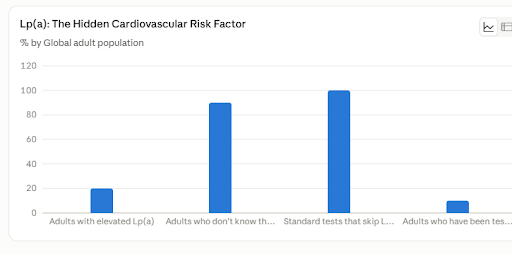
Sources: American Heart Association on global Lp(a) prevalence; Harvard Health Publishing on updated cholesterol guidelines; National Lipid Association 2024 focused update on Lp(a) testing.
Roughly 1 in 5 adults worldwide carry elevated Lp(a) , and almost none of them know. Because unless someone specifically orders the test, it doesn’t get run.
That’s what the new cholesterol guidelines are pushing to change. Per Harvard Health’s coverage of the updated recommendations, every adult should get an Lp(a) test at least once in their lifetime. Not annually. Just once. That’s all it takes to know.
So the question isn’t really should you get this test? Why haven’t you already?
Let’s break it down , what Lp(a) actually is, who needs it soonest, and how to add it to your next physical without turning cardiology into your new hobby.
What is Lp(a), really?
Lp(a) , pronounced “L-P-little-a” , is a type of lipoprotein particle that circulates in your blood, similar to LDL cholesterol (the “bad” kind), but with an extra protein attached to it.
That extra protein makes it sticky, inflammatory, and prone to building up in artery walls. It also promotes clot formation, which is a double-hit for cardiovascular risk. According to research published in the National Institutes of Health’s PMC database, Lp(a) is estimated to be 5-6 times more atherogenic than LDL cholesterol.
What makes Lp(a) unique is that levels are almost entirely genetic. You’re basically born with a set level, and it stays roughly the same throughout life. Diet, exercise, and even most cholesterol medications barely move it.
Quick facts worth knowing:
- Lp(a) is mostly inherited from your parents
- Levels are set by age 5 and remain stable for life
- About 20-25% of the global population has elevated Lp(a)
- In the U.S., a single-laboratory study of 531,144 people found 35% had Lp(a) above 30 mg/dL
- Standard cholesterol panels do NOT include it , it has to be ordered separately
That last point is the crucial one. You can have a “perfect” cholesterol result and still have dangerously high Lp(a), and nobody would know unless it was specifically tested.
Why the guidelines changed
For decades, Lp(a) sat in the “interesting, but nothing we can do about it” category of cardiovascular research. That’s shifted.
A few things happened. Research got much clearer about the direct link between elevated Lp(a) and cardiovascular events. Testing got cheaper and more widely available. And promising new medications specifically targeting Lp(a) are in late-stage clinical trials, meaning the “nothing we can do” reasoning doesn’t really hold anymore.
The evidence has become hard to ignore. A 2026 analysis of over 20,000 patients from three major NIH trials (ACCORD, PEACE, and SPRINT) found that adults with Lp(a) levels of 175 nmol/L or higher had a 31% higher risk of major cardiovascular events, a 49% higher risk of cardiovascular death, and a 64% higher risk of stroke , even when their standard cholesterol was under control.
The new guidance from cardiology groups now recommends testing Lp(a) at least once in every adult’s lifetime , regardless of whether your other cholesterol numbers look good.
As one Kaiser Permanente cardiologist explained, the goal is to identify hidden risk early, when there’s time to be aggressive about the other modifiable pieces like blood pressure, LDL, weight, lifestyle, before a first cardiac event.
Who should get an Lp(a) test?
Short answer: pretty much every adult, at least once. That’s the current guidance.
But some people should get it sooner rather than later:
- Family history of early heart disease (before age 55 in men, 65 in women)
- Personal history of heart attack, stroke, or aortic stenosis
- A close relative with known high Lp(a)
- High LDL that doesn’t respond well to statin therapy
- Recurrent cardiovascular events despite good treatment
- Anyone with a strong family history you can’t quite explain
Consider this. In a real-world case study published by NIH researchers, a patient with an abnormal lipid profile and family history had their heart attack risk calculated at 17% using traditional metrics. Once Lp(a) was factored in, that number more than doubled to 40%. Same person, same body , one extra data point completely reframed their risk.
Should I get an Lp(a) test? If you fall into any of the categories above, yes , soon. If not, it’s still worth asking about at your next physical. It’s a one-time test that tells you something you’d otherwise never know.
When should Lp(a) be tested? Ideally in early adulthood, especially if there’s family history. But any adult who hasn’t had it tested should get it done at their next appointment.
What is a normal Lp(a) level?
Lp(a) is usually reported in one of two units , either mg/dL or nmol/L , and the cutoffs are different for each. Your lab report will specify.
General reference ranges:
- Normal: Less than 30 mg/dL (or less than 75 nmol/L)
- Borderline: 30-50 mg/dL (75-125 nmol/L)
- High: Above 50 mg/dL (above 125 nmol/L)
- Very high: Above 100 mg/dL (above 175 nmol/L)
What does high Lp(a) mean? It means you have a genetically higher risk for cardiovascular disease , heart attack, stroke, and calcified aortic valve disease. The higher the level, the higher the risk.
A 2024 meta-analysis in the NIH database pooling data across multiple studies confirmed that elevated Lp(a) is significantly associated with a 31% increased risk of major cardiovascular events, 23% higher all-cause mortality, and 20% higher risk of myocardial infarction in patients with ischemic heart disease.
The good news is that knowing it changes what you can do about the other risk factors , you can be more aggressive about LDL cholesterol, blood pressure, weight, and lifestyle, all of which lower overall risk even when Lp(a) itself doesn’t budge.
Can you have high Lp(a) with normal cholesterol?
Yes, absolutely. This is one of the most important things to understand about Lp(a).
Because it’s genetic and independent of the other cholesterol markers, someone can have textbook-perfect LDL, HDL, and triglycerides , and still have Lp(a) sitting at three times the safe level.
That means they carry a much higher cardiovascular risk than their standard cholesterol panel would ever suggest. Research published in Frontiers in Cardiovascular Medicine has confirmed that Lp(a) operates through four distinct mechanisms , atherogenesis, thrombosis, calcification, and vascular inflammation , none of which show up on a standard lipid panel.
That’s exactly why the standard lipid panel isn’t enough for full cardiovascular risk assessment anymore. And it’s why the guidelines have shifted to include Lp(a) as part of a complete workup.
Is high Lp(a) inherited?
Almost entirely, yes. Lp(a) is one of the most heritable of all cardiovascular markers.
If one parent has elevated Lp(a), there’s a strong chance you do too. If both do, the odds are even higher. Which means , and this matters , if you get tested and your Lp(a) is high, it’s worth telling your adult siblings and children. They should get tested too.
Family patterns to watch for:
- Heart attacks in relatively young family members
- Strokes in siblings or parents before age 65
- A parent who “did everything right” and still had a cardiac event
- Aortic valve problems that seem to run in the family
- Multiple relatives with cardiovascular disease despite “normal” cholesterol
According to the American Heart Association, the genetic transmission of Lp(a) means it can quietly cluster in families for generations without being identified.
How often should Lp(a) be tested?
For most people, one time is enough. Because levels are largely genetic and stable throughout life, there’s no reason to repeat it year after year like a standard lipid panel.
Exceptions worth knowing:
- If new therapies targeting Lp(a) become available, retesting may be part of monitoring treatment
- If there’s a dramatic life change (severe kidney disease, hormone therapy shifts) that could affect levels
- If the first test came back borderline and your doctor wants a confirmatory reading
But generally? One test, one result, useful information for life.
What blood tests are done at an annual physical?
A standard annual physical usually includes:
- Complete blood count (CBC) , general health and immune function
- Comprehensive metabolic panel , kidney, liver, blood sugar, electrolytes
- Lipid panel , total cholesterol, LDL, HDL, triglycerides
- A1C or fasting glucose , diabetes screening
- Thyroid function (TSH) , often included
What’s not usually included:
- Lp(a) , has to be requested specifically
- ApoB test , a more detailed lipid marker also gaining traction in updated guidelines
- Vitamin D levels , sometimes added, sometimes not
For context, the CDC reports that nearly 94 million U.S. adults have total cholesterol above healthy limits, yet only a fraction have ever had Lp(a) checked. That’s a huge gap in a country where cardiovascular disease is the number-one killer.
If you want a full cardiovascular risk assessment, Lp(a) and ApoB are worth adding to the conversation with your doctor. Both are one-time or occasional tests, not annual ones.
What to do if your Lp(a) comes back high
First , this isn’t a diagnosis of heart disease. It’s a risk factor. A really important one, but not a verdict.
Practical next steps:
- Get more aggressive about LDL cholesterol , sometimes even below “normal” targets
- Manage blood pressure tightly
- Address other risk factors , weight, activity, sleep, smoking
- Have a real ASCVD risk assessment , your doctor can use a calculator that factors in Lp(a)
- Consider statin therapy if you’re not already on one and other risk factors align
- Talk to your family , siblings and adult children should test too
- Ask about clinical trials for Lp(a)-lowering medications (several are in late-stage trials, and the NIH clinicaltrials.gov database lists active studies)
There’s no lifestyle change that reliably lowers Lp(a) on its own. But addressing everything else lowers your overall risk significantly.
Common misconceptions about Lp(a)
A few things that trip people up:
- “My cholesterol is normal, so I’m fine.” Not necessarily. Lp(a) is completely separate and needs its own test.
- “There’s nothing to do about it, so why test?” There’s plenty to do about your overall risk, even if Lp(a) itself can’t be lowered yet.
- “Diet and exercise will fix it.” They don’t. That’s not a failure of effort , Lp(a) just doesn’t respond to lifestyle changes.
- “Statins will lower it.” Statins lower LDL but don’t reliably lower Lp(a). Some may even nudge it slightly upward.
- “If it’s genetic, testing is pointless.” Genetic doesn’t mean unactionable. Knowing changes how aggressively you approach everything else.
- “I’d need to test it every year.” Just once, in most cases.
How QuickMD Care handles cardiovascular screening in McKinney
If you’re in McKinney, Frisco, Allen, or Plano and you haven’t had a full cardiovascular risk assessment , or you’re overdue for a physical , QuickMD Care is a solid starting point.
The primary care team handles annual physicals, full lipid panels, ASCVD risk calculations, and specialized tests like Lp(a) and ApoB when they’re indicated. Bloodwork is done in-office, and results come with a real conversation , not just a portal message saying “everything looks fine.”
What that visit usually includes:
- Comprehensive annual physical
- Standard lipid panel plus A1C, blood pressure, and metabolic markers
- Discussion of family history and cardiovascular risk factors
- Lp(a) and ApoB testing when indicated
- Clear explanation of what each number means for you
- A plan if anything comes back off , including statin conversations, lifestyle recommendations, and cardiology referrals when needed
For anyone searching annual physical McKinney TX, cholesterol test McKinney TX, or a primary care doctor McKinney TX who actually looks at the full picture, this is what a modern preventive visit should feel like.
Full clinic services also cover on-site diagnostic lab testing McKinney TX , no separate lab trip needed for most bloodwork.
Common questions
What is a normal Lp(a) level?
Less than 30 mg/dL (or less than 75 nmol/L). Above 50 mg/dL is considered high, and above 175 nmol/L is where NIH research shows a significant jump in cardiovascular risk.
What does high Lp(a) mean?
Increased genetic risk for heart attack, stroke, and aortic valve disease , independent of your other cholesterol numbers.
Is Lp(a) included in a standard cholesterol test?
No. It has to be ordered separately.
Can you have high Lp(a) with normal cholesterol?
Yes. It’s genetically inherited and completely independent of your other lipid numbers.
Is high Lp(a) inherited?
Yes, almost entirely. If a parent has it, you may too , and so may your siblings and children.
How often should Lp(a) be tested?
Usually just once in a lifetime. Levels stay largely stable.
Should I get an Lp(a) test?
Especially if you have a family history of early heart disease. Even without it, testing once is now recommended by major cardiology groups.
When should Lp(a) be tested?
Anytime in adulthood, ideally earlier rather than later , especially if you have family history.
What blood tests are done at an annual physical?
Usually CBC, metabolic panel, lipid panel, A1C, and often thyroid. Lp(a) and ApoB need to be requested specifically.
Can lifestyle changes lower Lp(a)?
Not meaningfully, no. But addressing other cardiovascular risk factors , LDL, blood pressure, weight, activity , lowers your overall risk regardless.
Where the trustworthy guidance comes from
Reliable information about Lp(a) and updated cholesterol guidelines comes from a small handful of sources:
- The American Heart Association’s Lp(a) resource page
- The CDC’s cholesterol data and statistics
- The Harvard Health article on the new Lp(a) recommendations
- The Kaiser Permanente cardiologist’s explanation of the new cholesterol guidelines
- The National Institutes of Health’s PMC research database for peer-reviewed studies
- The SCAI 2026 Scientific Sessions late-breaking Lp(a) research
But the person who can actually help interpret your specific numbers and family history is your primary care doctor. Guidelines are general. Your risk is personal.
Ready to check?
If you’ve never had an Lp(a) test , and most people haven’t , that’s the sign to book one.
Call QuickMD Care in McKinney at (972) 645-9400 or book an annual physical online. Comprehensive lipid panels, Lp(a) testing when indicated, and a real conversation about your cardiovascular risk.
Not sure what you need? Come in for the physical. Lp(a) is one test, one time , and it can quietly change how the next fifty years of your health get managed.
More from QuickMD Care
- Annual physicals, chronic disease management, and diagnostic lab testing McKinney TX , Primary Care Services
- Full list of clinic services , Services Overview
- Pediatric and family care , Pediatric Care
Most heart attacks look like they came out of nowhere. They usually didn’t. They were quietly building for decades , often driven by a risk factor nobody ever tested for.
Lp(a) is the number your standard cholesterol panel has been missing. One test. One time. It might be the most useful thing you learn about your heart this decade.
More From QuickMD Care
- Primary care, hypertension management, and preventive checkups – Primary Care Services
- Full list of clinic services including labs and diagnostics – Services Overview
- Family and pediatric care – Pediatric Care
- Best School Physicals in McKinney, TX: Your Complete Guide:
https://www.quickmdcare.com/best-school-physicals-in-mckinney-tx-your-complete-guide/ - Top 10 Budget-Friendly Protein Foods for Toddlers: Dietary Consult in McKinney, TX:
https://www.quickmdcare.com/top-10-budget-friendly-protein-foods-for-toddlers-dietary-consult-in-mckinney-tx/ - Why Prenatal Visits Near McKinney, TX Are a Lifeline for Expecting Moms:
https://www.quickmdcare.com/why-prenatal-visits-near-mckinney-tx-are-a-lifeline-for-expecting-moms/ - Well Child Care: Why Regular Checkups Matter for Your Child’s Health:
https://www.quickmdcare.com/well-child-care/ - 10 Iron-Rich Foods for Adults in 2026: Boost Your Energy and Health: https://www.quickmdcare.com/10-iron-rich-foods-for-adults-in-2026-boost-your-energy-and-health/
- AAP Releases its Recommended 2026 Childhood and Adolescent Immunization Schedule – Don’t Miss:https://www.quickmdcare.com/aap-releases-its-recommended-2026-childhood-and-adolescent-immunization-schedule/
- Swimmer’s Ear vs. Ear Infection in Kids: Summer Signs Parents Shouldn’t Ignore : https://www.quickmdcare.com/swimmers-ear-vs-ear-infection-in-kids-summer-signs-parents-shouldnt-ignore/
- Best Summer Foods for Adults & Kids: Stay Hydrated, Energized, and Healthy:https://www.quickmdcare.com/best-summer-foods-for-adults-kids-stay-hydrated-energized-and-healthy/
- Summer Sports Injuries in Kids: When Pain or Swelling Needs an X-Ray: https://www.quickmdcare.com/summer-sports-injuries-in-kids-when-pain-or-swelling-needs-an-x-ray/
- High Blood Pressure at Home: When Should You See a Doctor? : https://www.quickmdcare.com/high-blood-pressure-at-home-when-should-you-see-a-doctor/
- Back-to-School Pediatric Checklist: Health Signs Parents Should Review: https://www.quickmdcare.com/back-to-school-pediatric-checklist-for-mckinney-parents/
Book the physical. Ask about Lp(a). Know what’s actually going on before your body decides to tell you.
About QuickMD Care
QuickMD Care offers family-focused treatment, including highly qualified services in both pediatrics and adults under a single, well-equipped and patient-friendly clinic. The team provides patients with timely care in the most compassionate manner, including basic checkups and addressing unexpected issues. When families are seeking a reliable primary care physician McKinney or quick urgent care pediatrics McKinney, TX, they will find the quality and convenience of QuickMD Primary Care.
10101 Westridge Blvd, Suite 101
McKinney, TX 75070
New location : Avondale/Haslet ,Texas -76052
Phone: 972-645-9400
Website: quickmdcare.com Quick MD Care